
Lots of Things You Can Learn About Whisky by Reading the Label
You are in your favorite boutique liquor shop, looking to try something new. But the selection is huge. Almost mesmerizing. Unless you spend countless hours on your computer researching whisky (like me, sometimes), the label is your most important source of information. It can be a treasure trove, if you know what to look for. And a mine field if you don’t.
There are two types of information on whisky labels. First, there is marketing stuff, to attract you to, and to sell you the product. More importantly, however, there are facts about the whisky. This is where you need to focus.
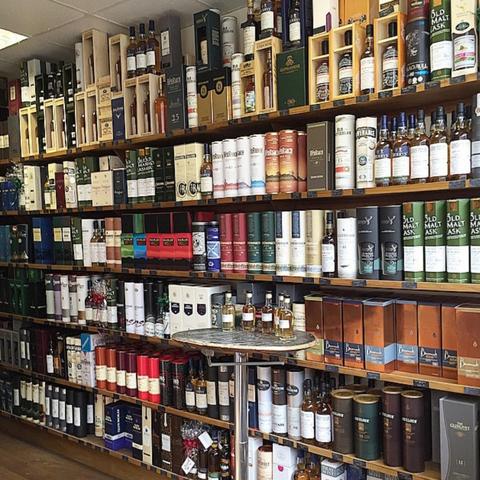
First, let’s get past the marketing stuff. The fancy wooden boxes, the sleeves, the bright colours, the adorned cork toppers. Admittedly, I have purchased more than one whisky simply because it looks great in my whisky room. Mea culpa. But if you are shopping for product, based on what it will taste like, here’s what you can pretty much ignore on the box and on the label;
– The outer package. Sometimes it’s a box, but usually it’s a sleeve. It has a lot of the same essential information as the label, buried among cool descriptive terms and wonderful stories about product mystique and lore. Which I love. But it doesn’t dictate the whisky that I buy.
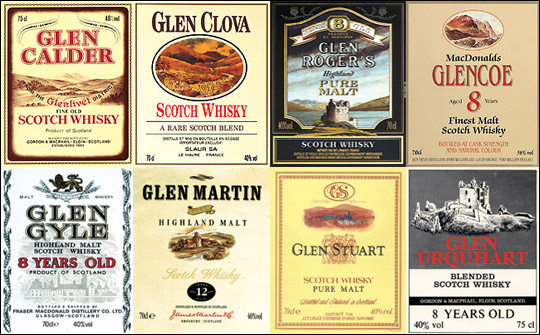
– The brightly colored label. This is to get your attention. There are a lot of whiskies on the shelf and the colors and fonts are designed to attract your eye to their product. Granted, a great looking label also looks nice on your whisky shelf at home.
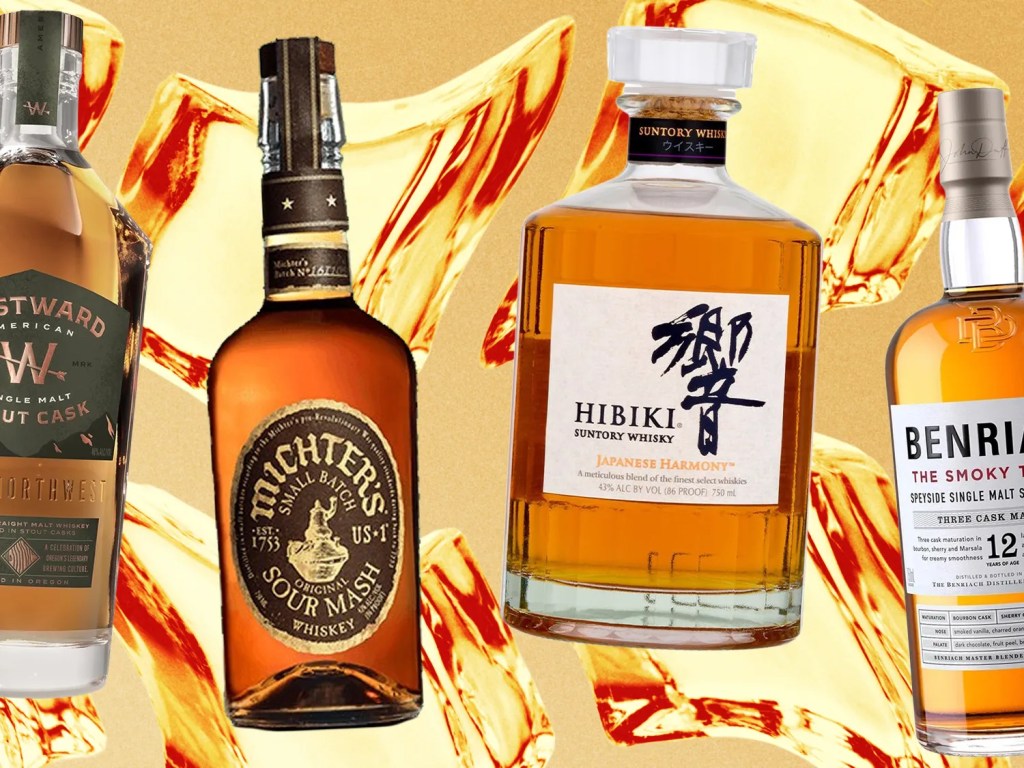
– The bottle and/or package shape. There are bottles shaped like stills, skulls, dragons, musical instruments, and a host of other things. They can be adorned with coats of arms, coats of armor, pewter, race horses, birds, and fancy stoppers. Again, it’s to attract you to their product.
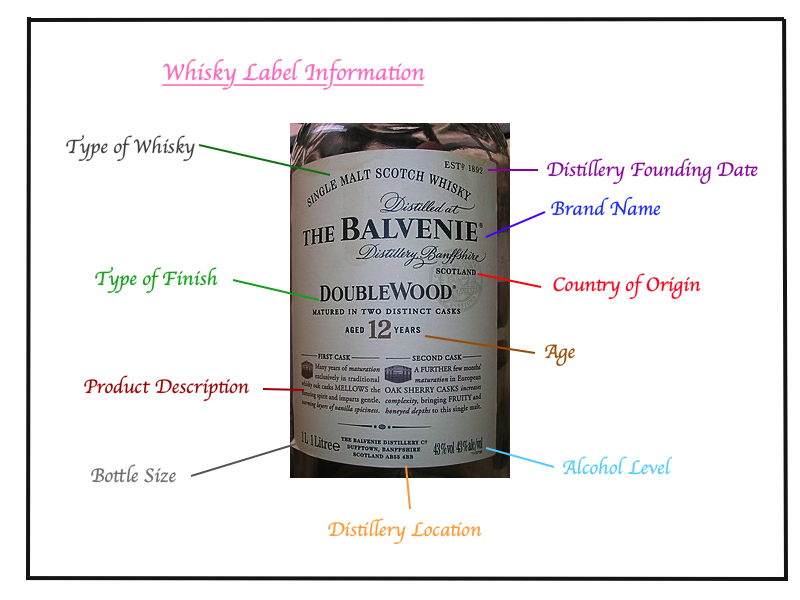
So, what can we take from a whisky label that tells is somethng about the product inside the bottle?
– The name. An Ardbeg is gonna taste a lot different then a Glenlivet. Or a Knob Creek Bourbon. Or a Green Spot. You get the picture.
– Where it was produced. If you have a whisky from the Speyside Region that you really like, then another brand from the same region will probably have a similar taste. These are broad brush strokes, of course, but different parts of the world tend to produce different tastes.
– The kind of whisky. Bourbon, Single Malt, Single Pot, Rye, and Blended are examples of the various kinds of available whisky. So a single malt scotch whisky from Islay will tend to have similar taste characteristics. To either look for or to stay away from. Your choice.
– The finish. I like sherry finished whisky. So, I tend to buy them. Not much more to say here. Corn, rye, sherry, port, barley. Buy ’em all, or find the ones you like.
– The ABV (alcohol by volume). We’re getting a bit into the weeds here, but there is a huge difference between the taste of a standard 40% whisky and a 66% cask strength one. Huge.
– Age. Some whisky lists the age and some don’t. But the general rule is that older whiskies tend to taste smoother and have more complex flavor. And older whisky costs more because it takes a lot longer to make it and a significant amount is lost to the angels in the aging process. Is it worth it? You’ll decide where your sweet spot of flavor vs price lies. And if there is no age statement on the bottle, then you might need to do a bit of reading to get an idea of what’s in the bottle.
I’m certainly not suggesting that you only buy whisky that you think will taste like your current favorite. There are many “new favorites” out there waiting to be discovered. But you can let the label be your guide to the next great tasting whisky to land on your shelf. Cheers!
 Whisky Love